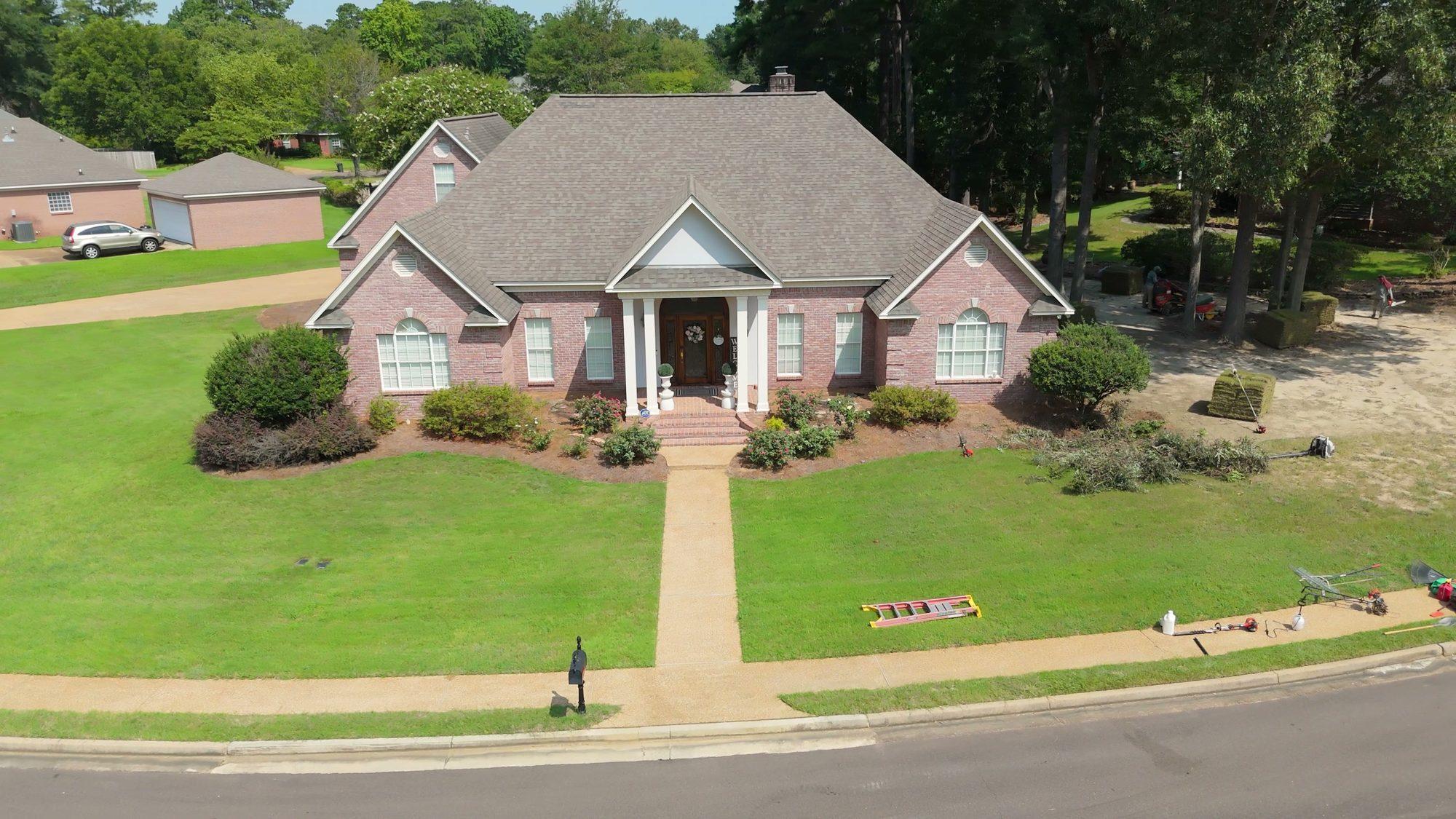
We fix the water first, then clean up and put the lawn back. Call (601) 707-6661 for a free written estimate.
Why Central Mississippi yards do not drain
Two things work against you here. The first is rainfall: the Jackson metro averages well over fifty inches a year, and a lot of it arrives in two-inch bursts during spring storms and late-summer systems off the Gulf. The second is the soil. Yazoo clay doesn't absorb water so much as seal against it.
Once the top inch is saturated, everything else runs off, and it runs to the lowest point on the lot, which on a graded subdivision lot is very often right next to the house.
Builders grade for the day of closing, not for year five. Settled backfill around the foundation, a swale that got filled in by the neighbor's fence, downspouts that dump at the corner, and a patio pitched the wrong way are the usual suspects. We walk the property during or right after a rain when we can, because that shows the problem better than any survey.
French drains and catch basins
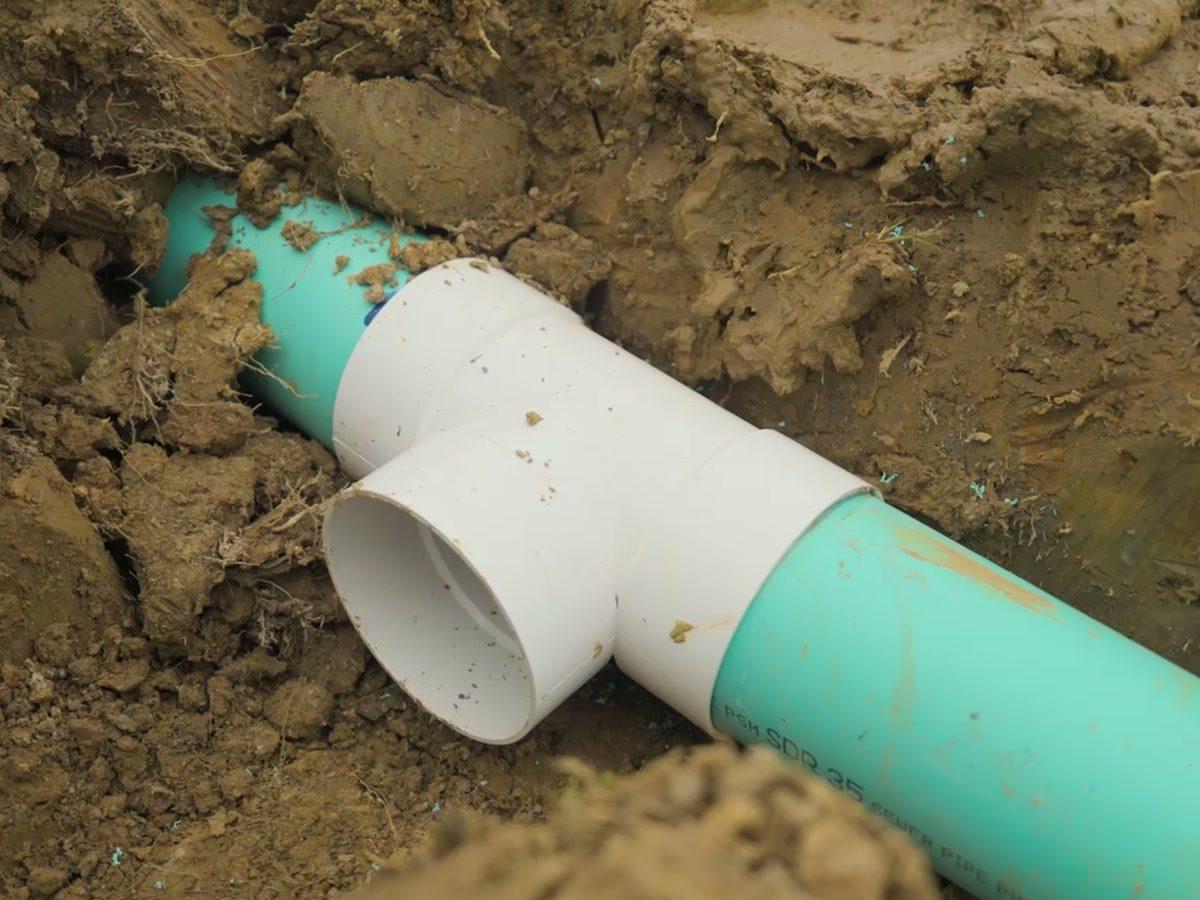
A French drain is a trench with perforated pipe in gravel, wrapped in fabric so the clay doesn't silt it shut. It collects water under the surface and moves it somewhere it can leave. It's the right fix for a soggy strip along a fence line, water against a foundation, or a slope that weeps.
The drains we see fail usually fail the same way: no fabric, pipe laid flat with no fall, and no outlet, so the trench turns into a longer puddle. We lay ours to grade with a laser and run them out to the street, a curb cut, a dry well or a pop-up emitter at the low corner of the lot.
Catch basins are for surface water. A basin at the low spot in the lawn, in a bed, or where a patio meets a door, with solid pipe running to an outlet, takes the sheet flow off the yard in minutes instead of days. We size them for the storms we get here, not the average.
Downspout routing and regrading
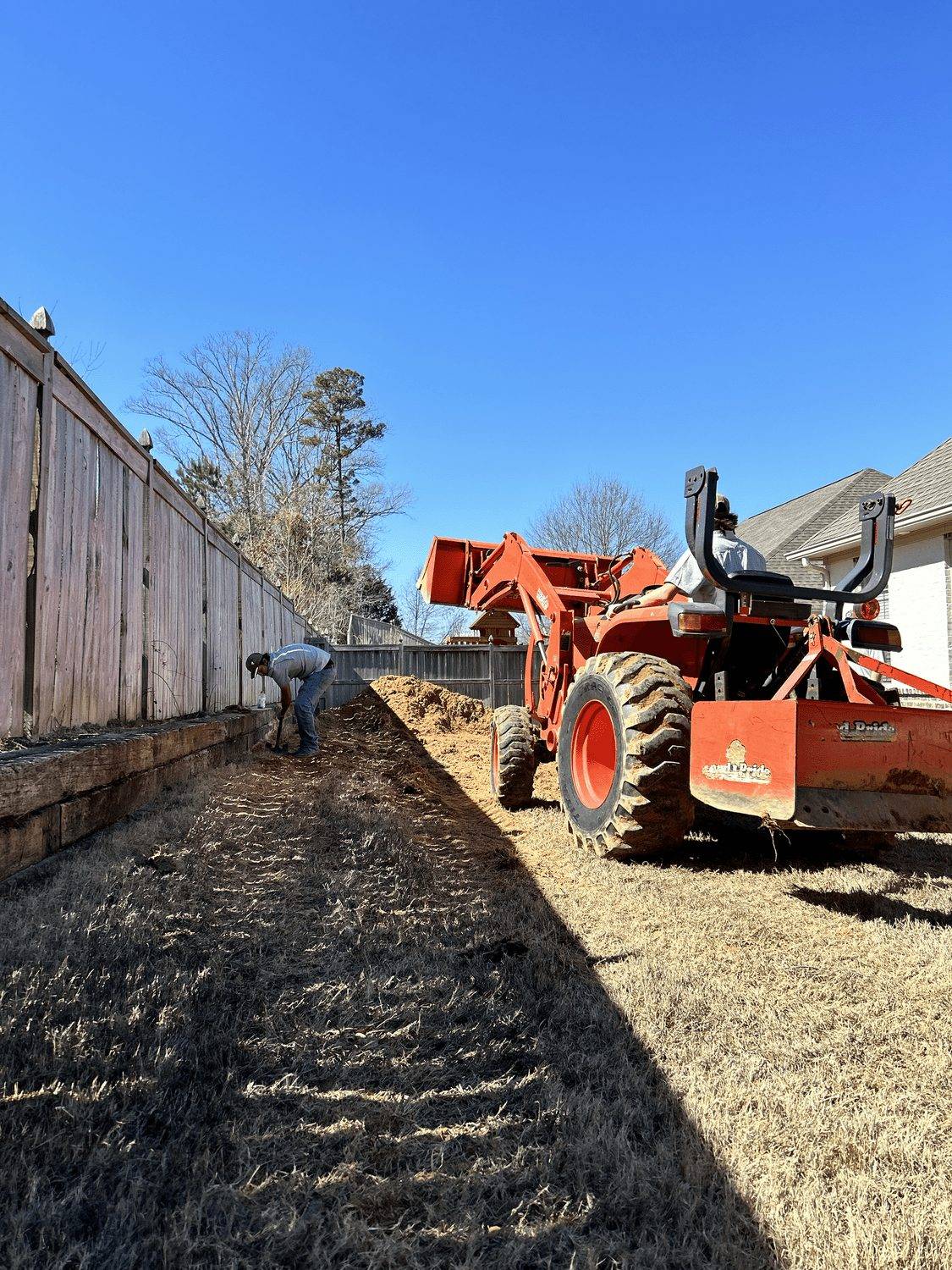
The first drainage fix on most Madison homes is getting roof water away from the house. A 2,500-square-foot roof puts over 1,500 gallons at the foundation in a one-inch rain. We run downspouts underground in solid pipe to daylight or a dry well, with cleanouts so leaves can be cleared.
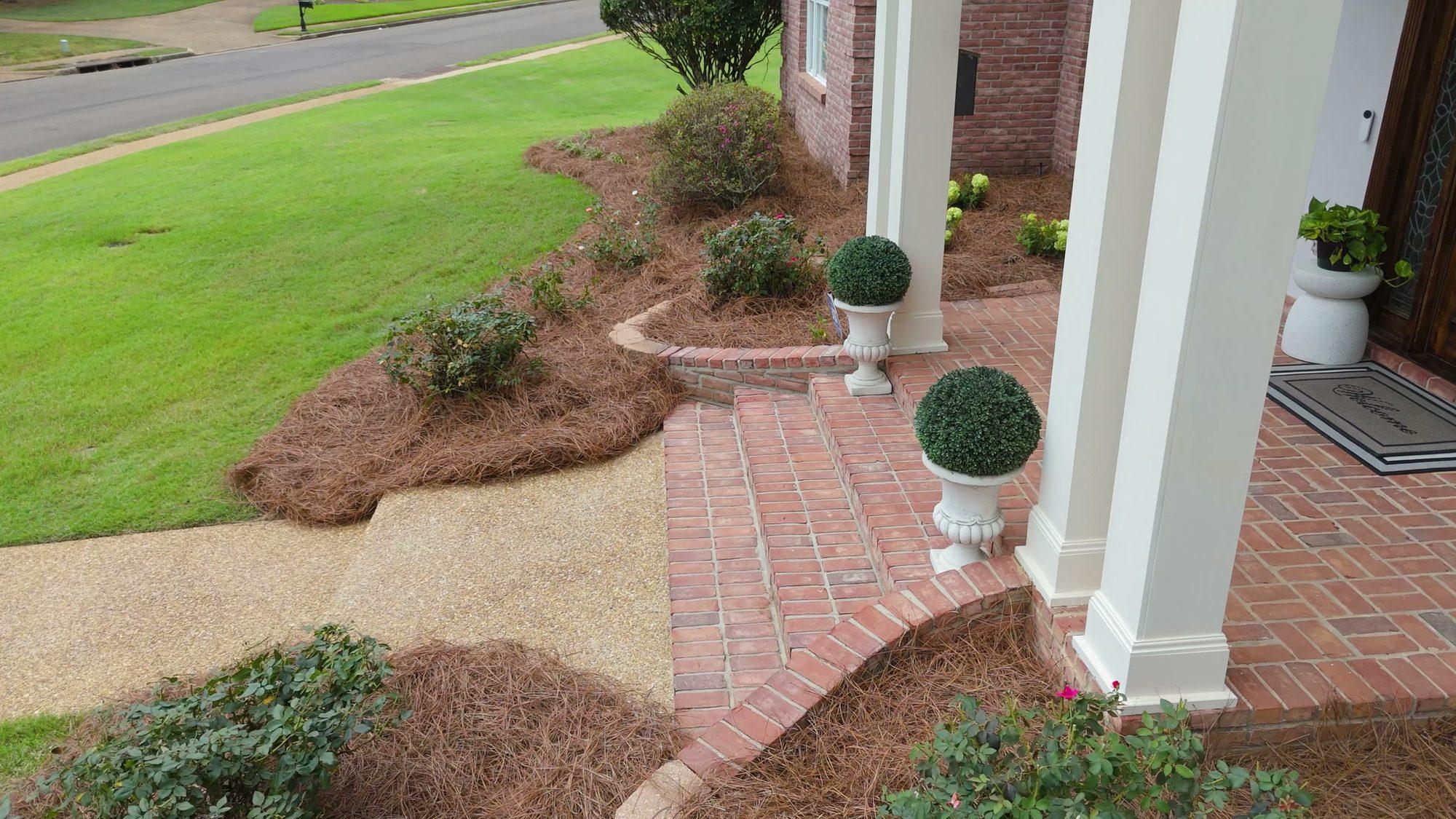
Where the grade is the problem, we bring in fill, rebuild a slope of six inches over the first ten feet from the house, and rebuild the swales between lots so water has a path.
Dry creek beds and surface solutions
Where a lot has a natural low path, a dry creek bed lined with fabric, river rock and boulders carries surface water the way a swale would, and it looks like part of the landscape. It pairs with a catch basin at the top and an outlet at the bottom. It also handles the volume a pipe alone would struggle with in a heavy storm.
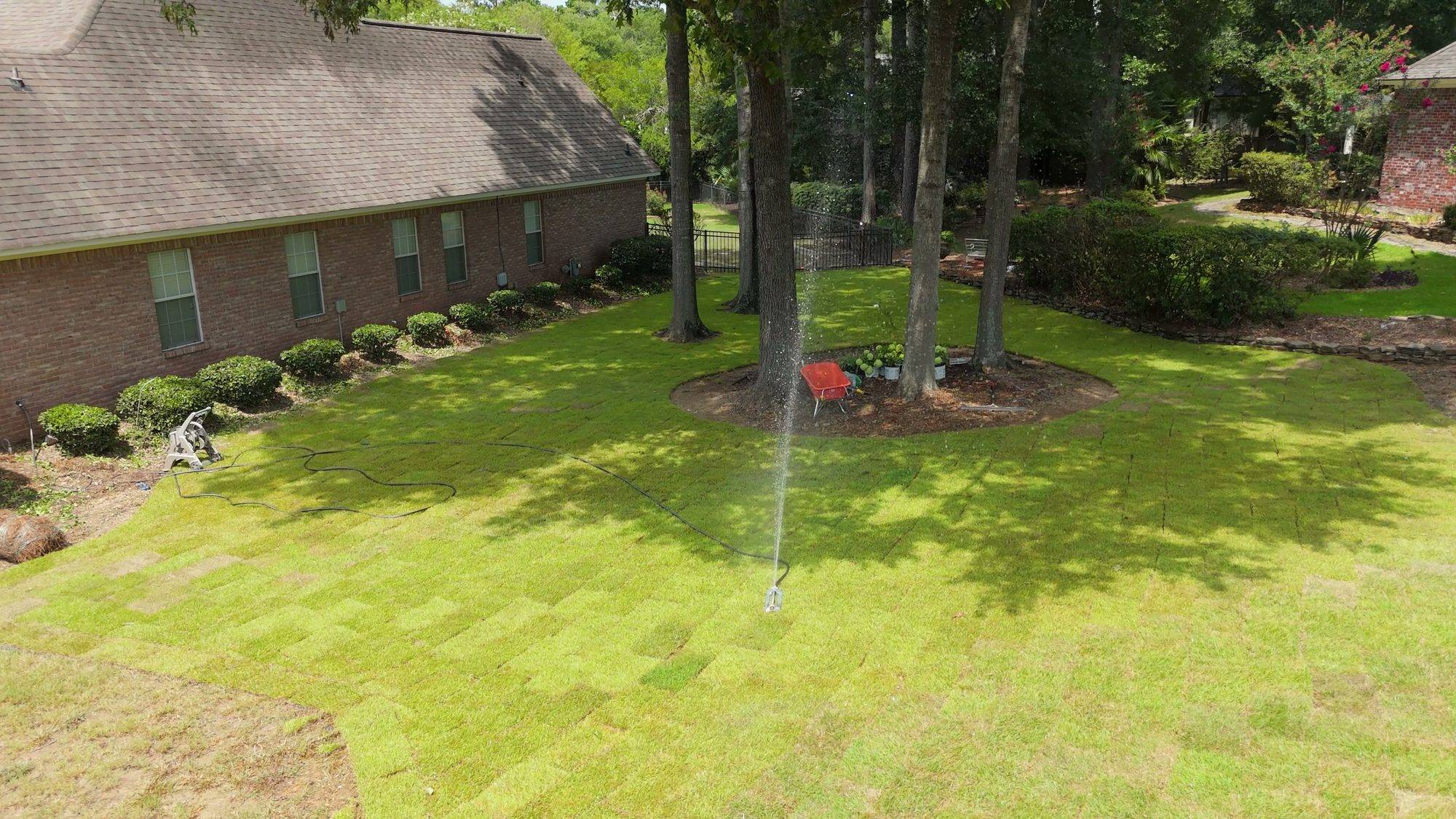
Leaf removal and yard cleanup
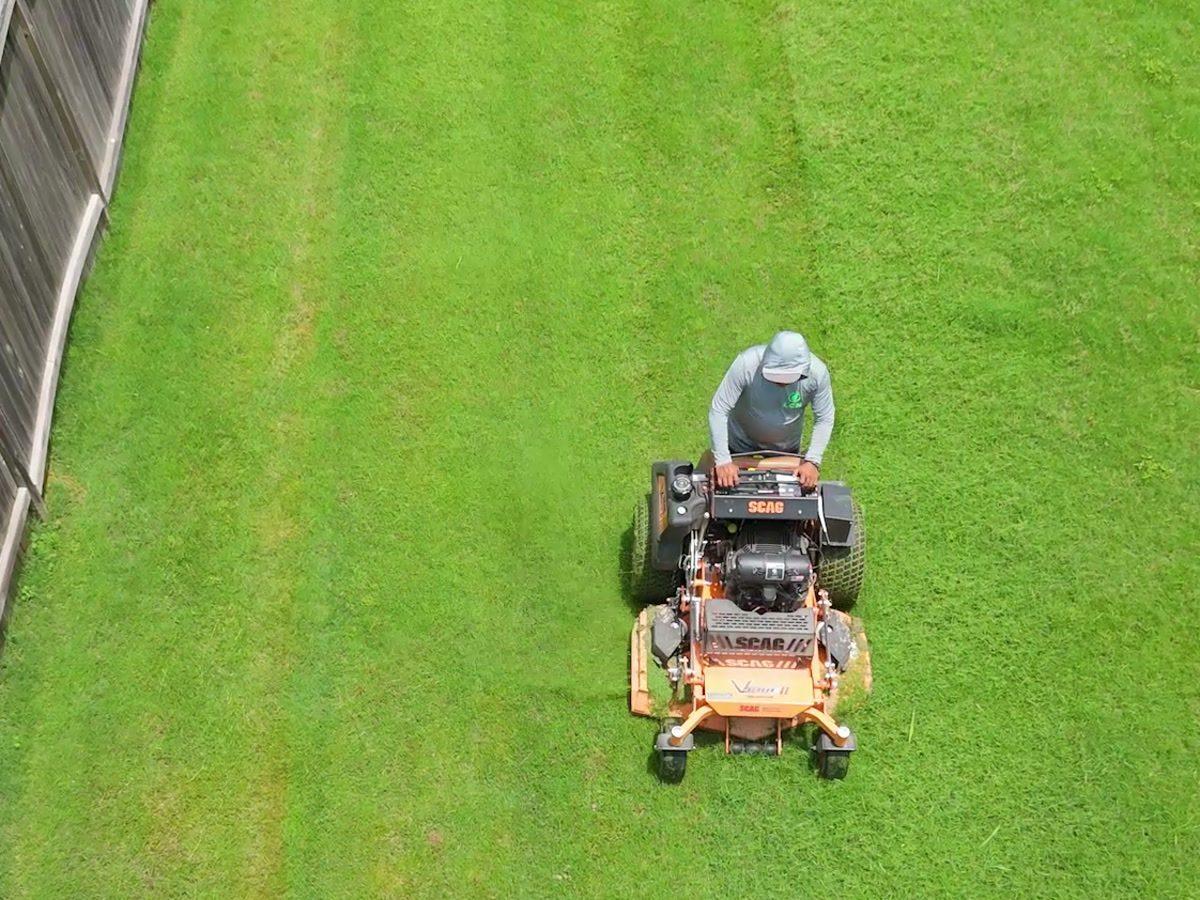
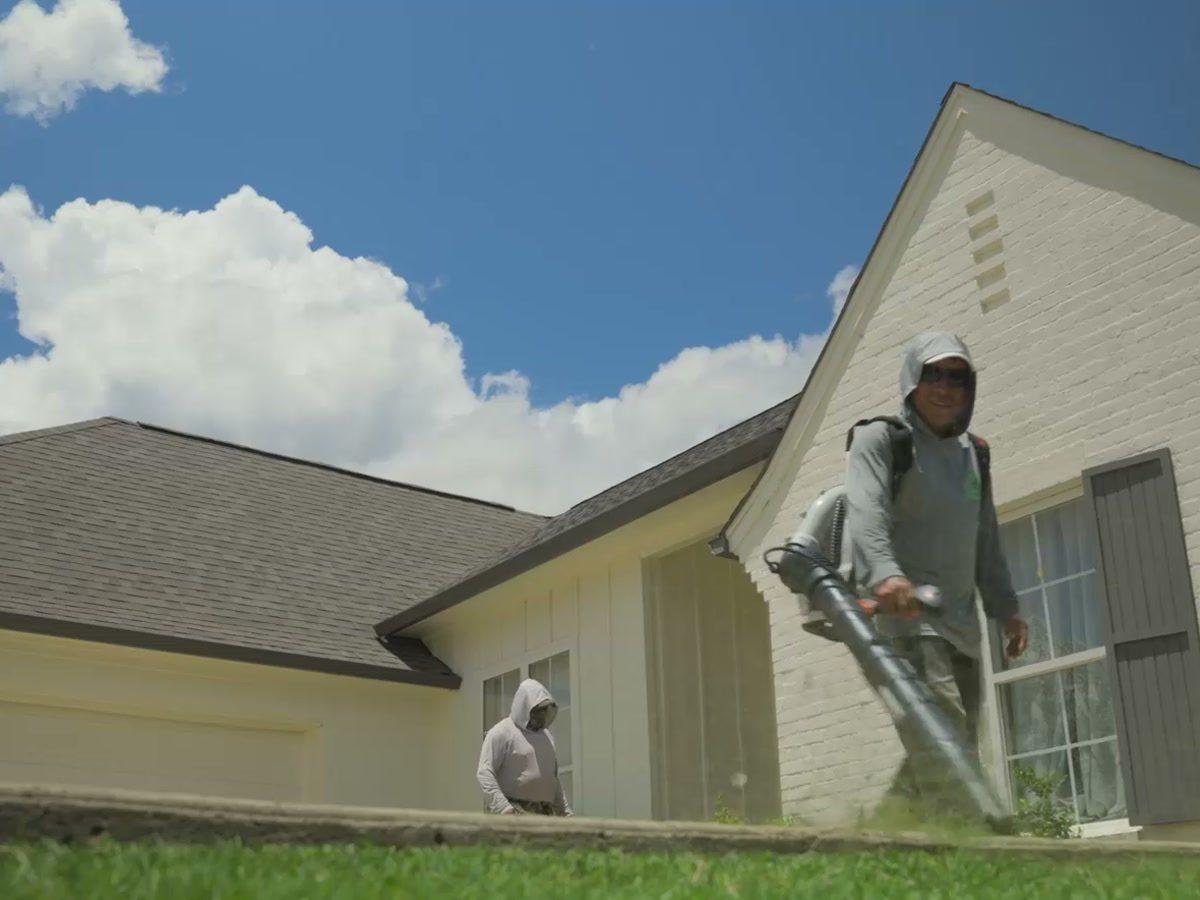
From October through December the pecans and oaks drop more leaves than most people can keep up with, and leaves left on warm-season turf over winter smother it. We do scheduled leaf removal for weekly customers and one-time cleanups for everyone else: leaves, beds, gutters at ground level, and hauling. Spring cleanups reset the property before the first mow.
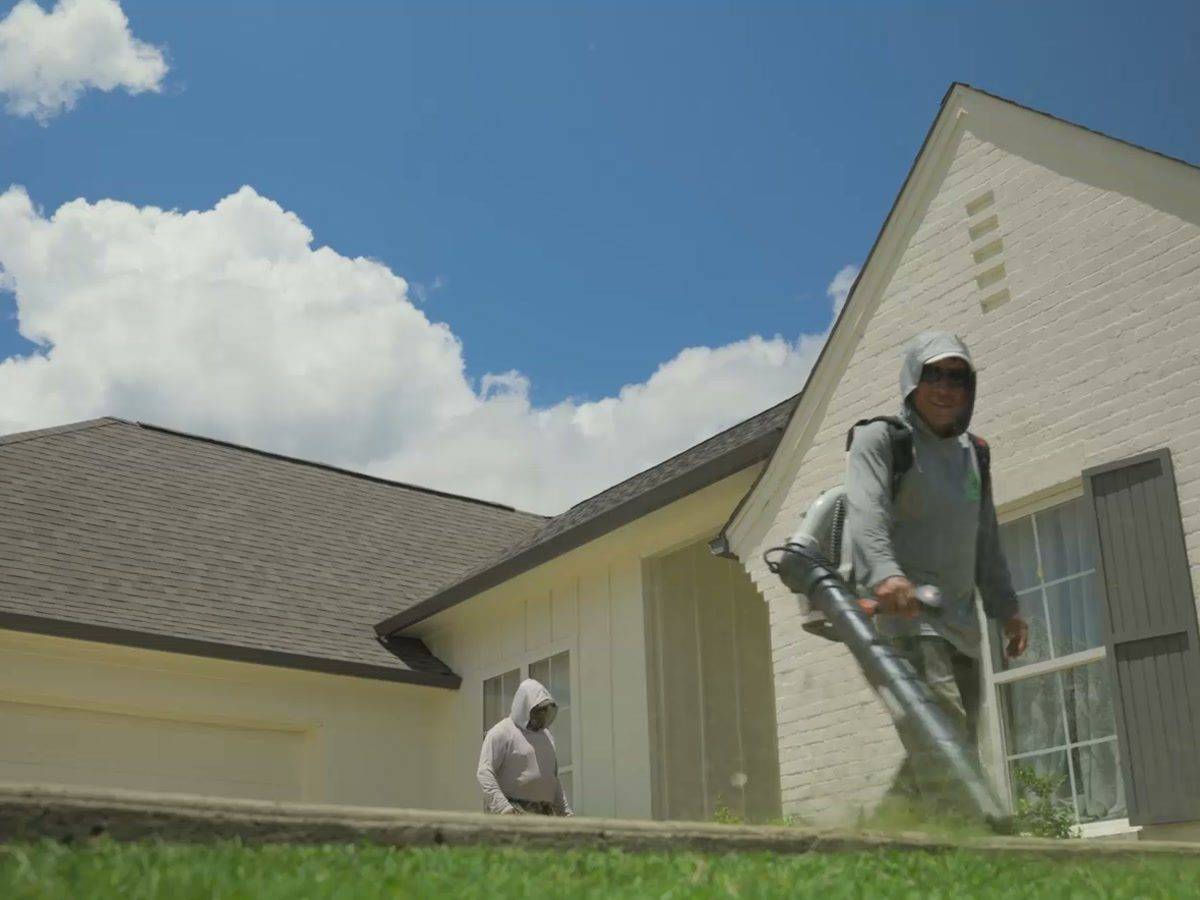
Commercial drainage and grounds
Parking-lot islands that flood, retention areas that need mowing and clearing, and drainage along building foundations for churches, offices and HOAs in Madison and Ridgeland.
What a drainage estimate includes
We don't quote drainage from the street. On the walk-through we look at where water comes onto the lot, where it collects, where it can legally leave, and what the soil looks like a foot down.
The written estimate lists each piece separately: linear feet of French drain and pipe size, number and size of catch basins, downspout runs, cubic yards of fill for regrading, dry-creek materials, and sod or seed to restore the surface.
That way you can do it in phases, starting with the downspouts and the low corner and adding the rest next season. If the problem is a neighbor's grading or a subdivision drainage easement, we'll tell you that too. A drain on your side can't fix water being sent from theirs.