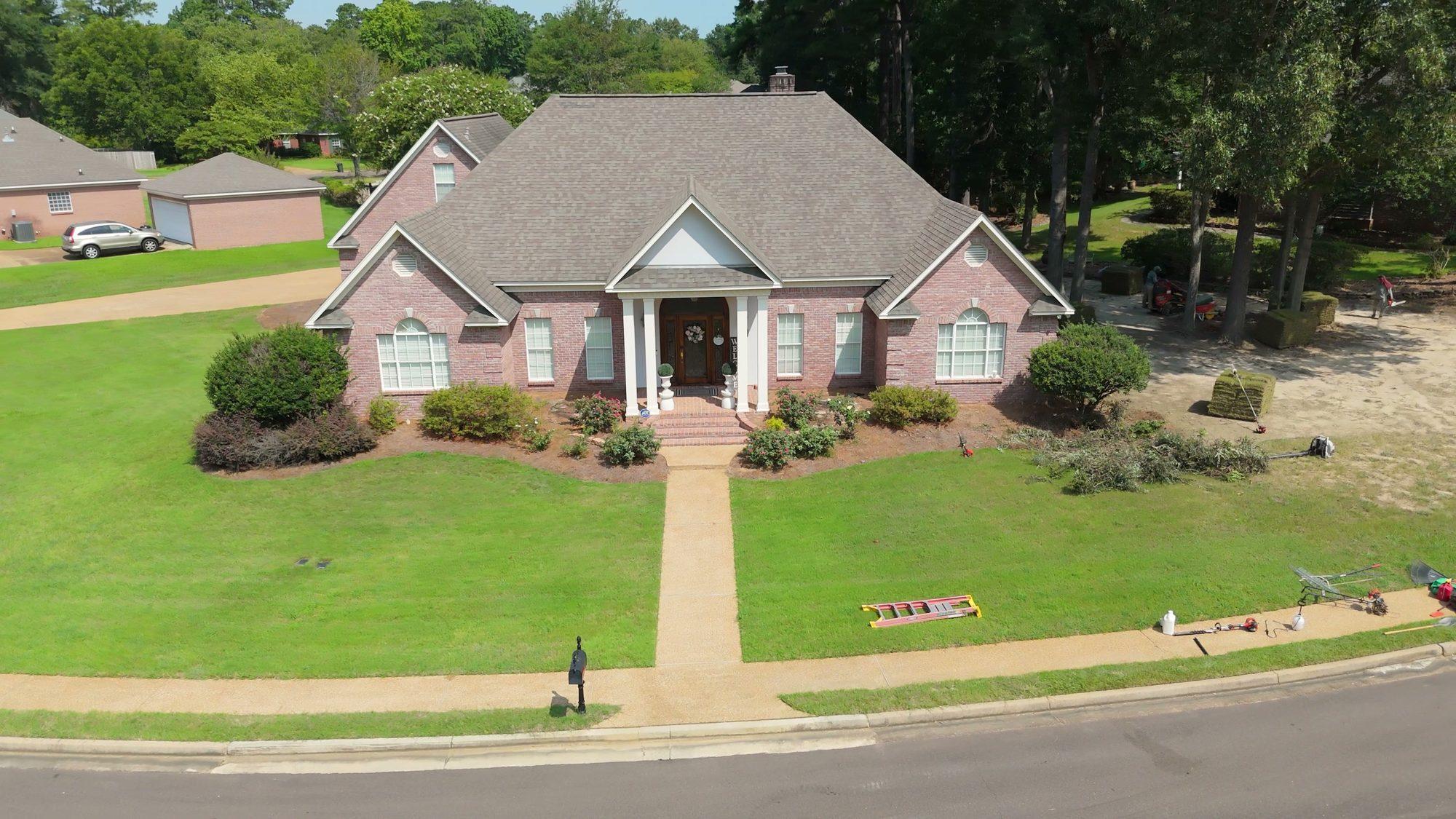
Front-yard refreshes, full designs for new builds, foundation plantings, privacy screens, bed resets with mulch or pine straw, hedging and pruning, and low-voltage landscape lighting. We install it, and we can keep it up afterward. Call (601) 707-6661 for a free written estimate.
Design that fits Central Mississippi
A landscape in Madison has to survive ninety-five-degree Julys with weeks of no rain, then twenty-degree nights in January, and it has to do it in Yazoo clay. Plants that look great at a garden center in Atlanta or Dallas often don't make it here. We design with what has proven itself in Madison County.
Crape myrtles, Southern magnolias, live oaks and the natives you see along the Natchez Trace give a yard its structure. Boxwood, holly, loropetalum, Indian hawthorn and dwarf yaupon make the hedges and foundation plantings. Azaleas, hydrangeas and camellias bring color in the right exposure, and ornamental grasses, liriope and daylilies keep beds tidy with little effort.
It starts with a walk of the property. We look at sun and shade through the day, where the water goes when it rains, the lines of the house, and how you use the yard. Then you get a plan: a sketch or a scaled drawing depending on the size of the job, a plant list and a written price. On a new build we work in phases. Hardscape and grading first, then irrigation, then beds and trees, then sod and lighting.
Bed preparation, mulch and pine straw
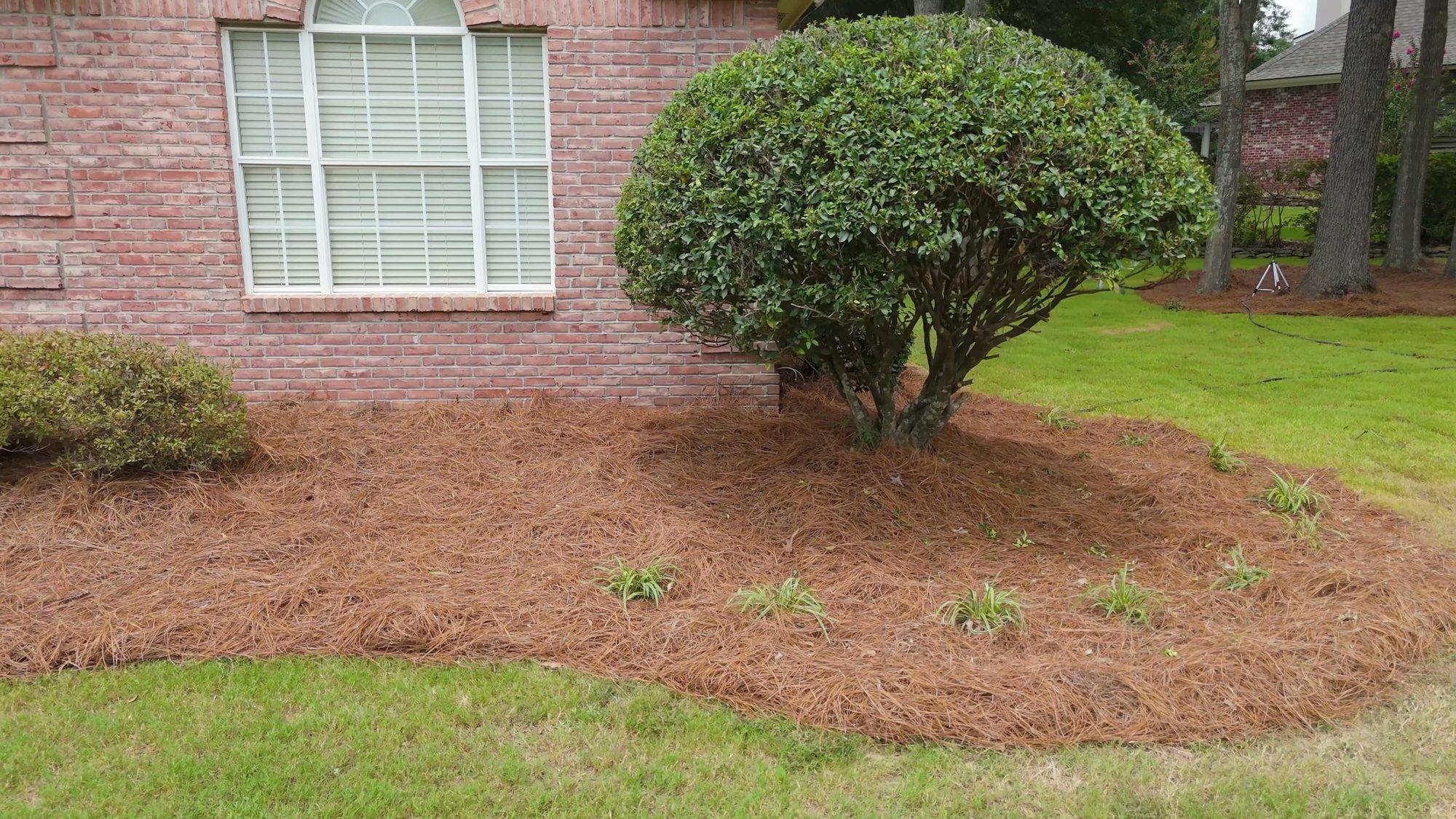
Most beds fail because of what's under them. New-construction lots in Gluckstadt and Madison are graded with subsoil clay, and a shrub planted in that sits in a bathtub after every rain. We cut the bed with a clean edge, remove the top layer, amend with compost and soil conditioner, and crown the bed slightly so water sheds. Plants go in at the right depth with the root ball roughed up, and everything gets a good first watering.
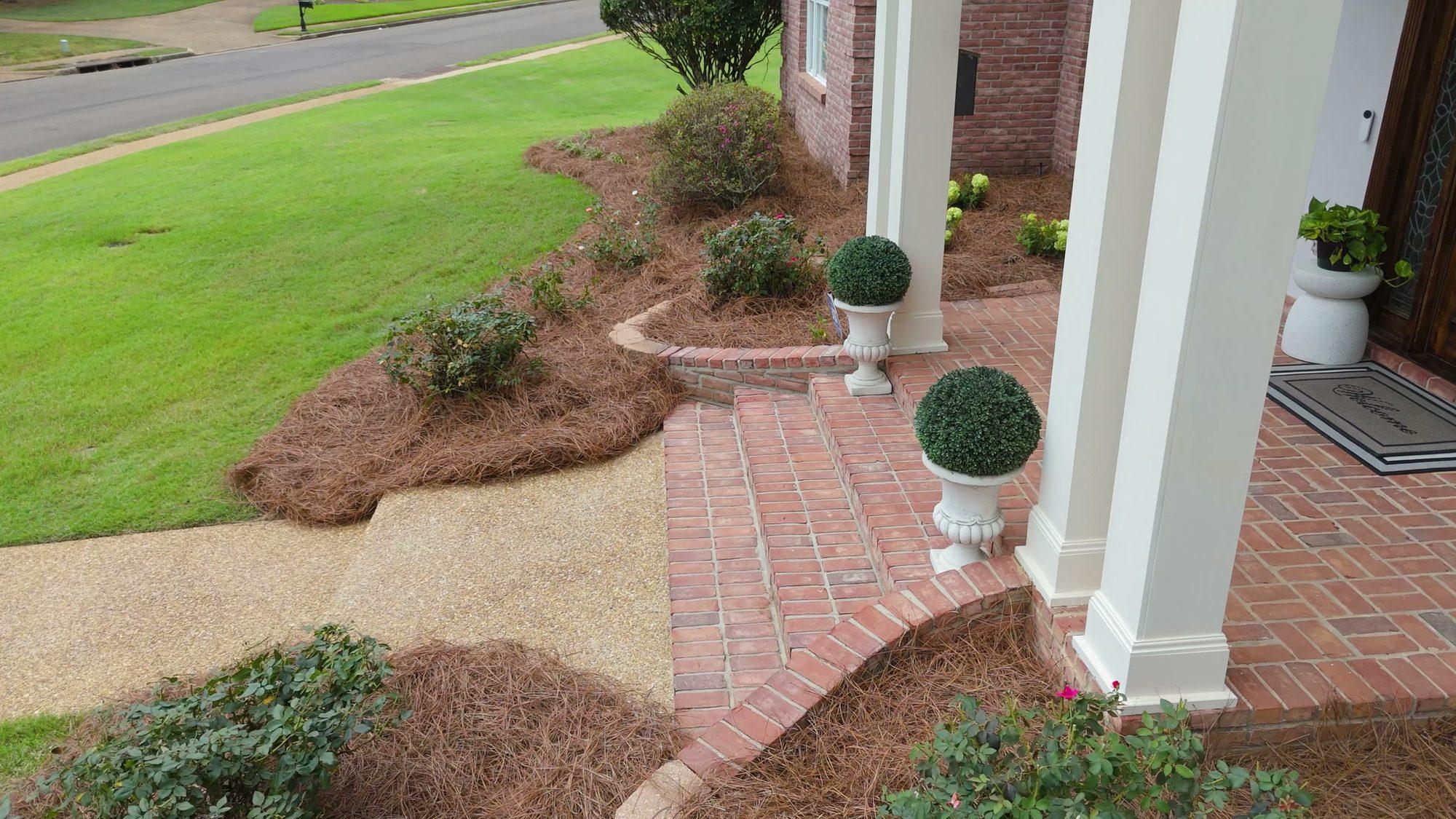
Then we top it. Pine straw is the Central Mississippi default. It's light, it knits together on slopes, and it looks clean against brick. Hardwood mulch holds moisture better and suits modern and wooded properties. Either way, a refresh in early fall before leaf season and again in spring keeps the beds looking finished. Weekly customers get it on a schedule. Everyone else can book it as a one-time job.
Tree and shrub planting
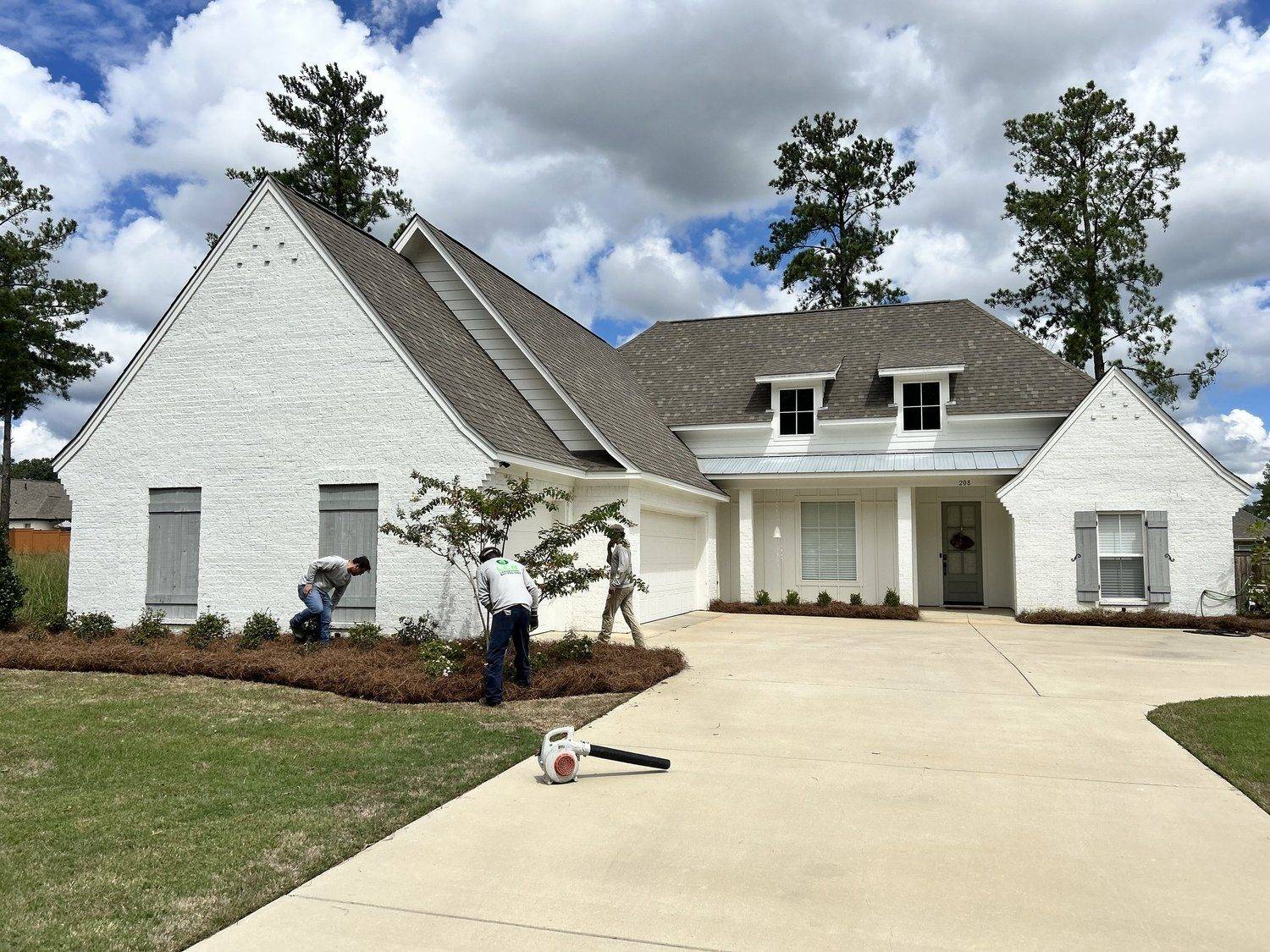
A tree is the one decision in the yard that keeps paying off. A live oak or Shumard oak planted in the right spot shades the house in fifteen years. The wrong tree in the wrong spot lifts the driveway and drops limbs on the roof.
We plant container and balled-and-burlapped trees from local growers, stake them when the site needs it, and set a watering schedule for the first two summers, which is when most young trees are lost around here. Fall and late winter are the best planting windows in Madison County, because the roots establish while the top is dormant.
With shrubs and hedges, spacing matters more than people expect. We plant for the mature size, not for how full the bed looks on day one, so you're not ripping out crowded boxwoods in five years.
Hedging, pruning and seasonal cleanups
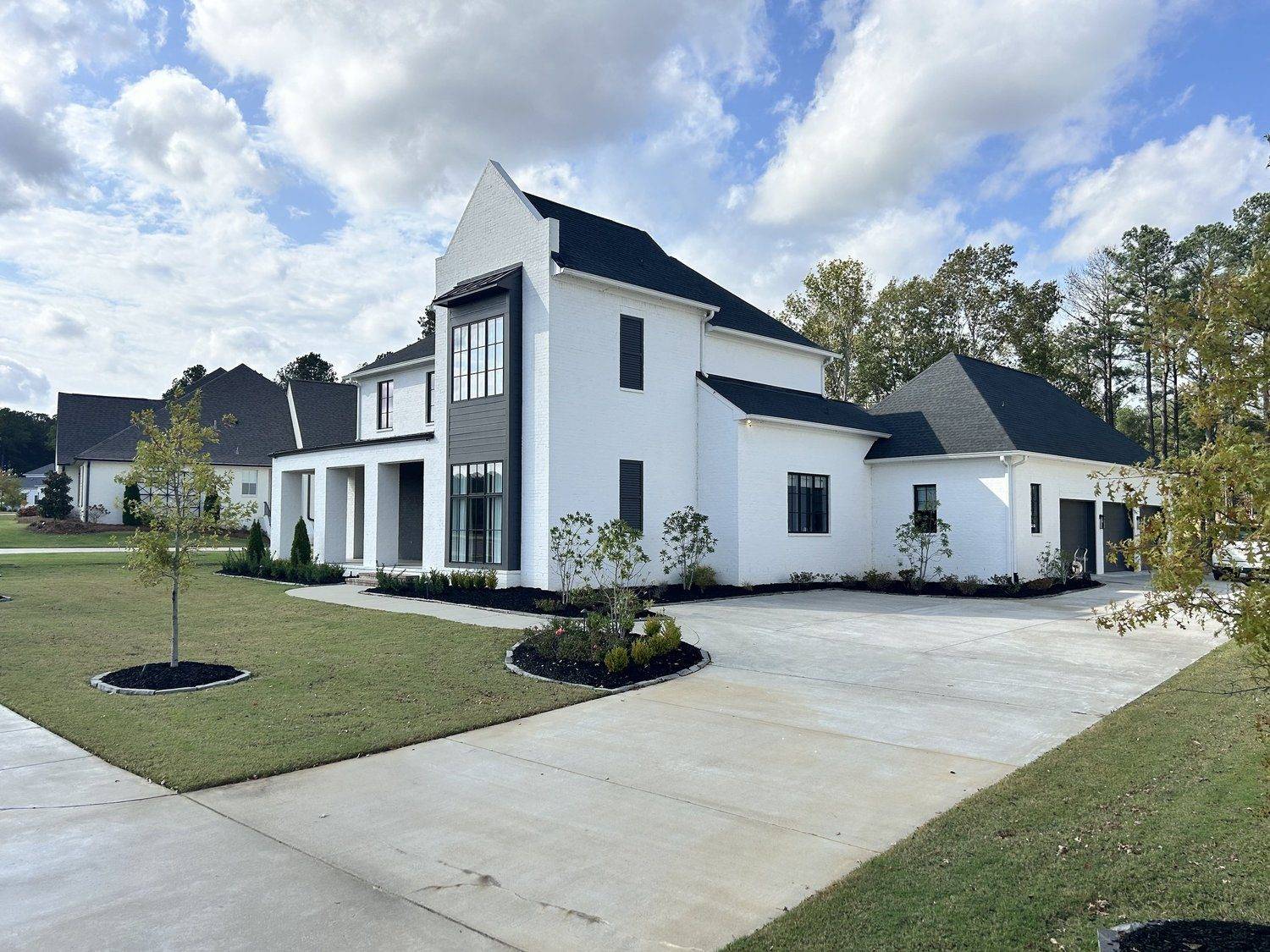
Crape myrtles don't need to be topped. Azaleas get pruned right after they bloom, not in fall. Hollies and boxwoods take shaping in late spring and a light touch in late summer. Ornamental grasses get cut back in February. Knowing the calendar is the job, and it's included in our weekly maintenance. We also do one-time cleanups: overgrown beds, hedges that were let go, leaf removal, and getting a property ready to list.
Landscape lighting
Low-voltage LED lighting is one of the most noticeable upgrades on a Madison home. Path lights along the walk, up-lights on the oaks and the facade, a wash on the front bed, and a soft light on the address. We design it to look warm, not lit up like a car lot.
We install it in a day, put it on a timer or a photocell, and keep the transformer easy to reach. Everything can be serviced. If a mower clips a fixture in three years, it's a ten-minute swap.
New construction and builder packages
Gluckstadt, Reunion, Lake Caroline and the Highway 25 corridor in Brandon are adding homes fast, and builder landscaping is usually the minimum to pass closing. We do the second pass: fix the grading the builder left, get the beds out of subsoil, replace what died the first summer, and add the trees and lighting that make the house look finished.
Commercial landscapes
Office parks, churches, HOA entrances and medical buildings in Madison and Ridgeland need grounds that look sharp on a schedule without much fuss. We design for easy upkeep: tough plants, clean edges, irrigation that works, and pine straw or mulch on a rotation.
What a refresh actually costs, and what changes it
People ask for a number before the walk-through, and we understand why. But the same front yard can be a simple bed reset or a full rebuild. It depends on how much of what's planted is worth keeping, whether the grade and drainage under the beds are right, and how big the plants are when they go in.
A 3-gallon holly and a 15-gallon holly look the same in five years and cost very differently today. We show both on the estimate so you decide where the money goes. Lighting, irrigation extensions and hardscape edges are quoted as separate lines, so nothing hides in a lump sum, and you can phase the project across seasons if you'd rather. What we won't do is put plants in unprepared clay to hit a low number. That yard costs more the second time.
Native and low-water planting
If you want a yard that needs less watering, we design with Mississippi natives and adapted plants: oakleaf hydrangea, Southern wax myrtle, yaupon, muhly grass, coreopsis and black-eyed Susan, native azaleas in shade, and switchgrass on slopes. They establish in the clay with the same bed preparation and need far less water after the first year.